Services

Rectal Prolapse

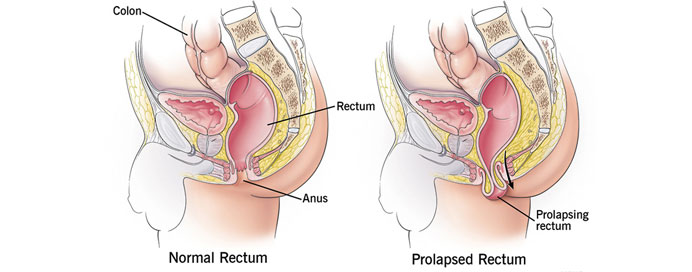
Rectal prolapse is a condition where part or all of the rectum (the last part of the large intestine) slips down through the anus, often protruding outside the body. This can range from mild cases, where the rectum only partially descends, to severe cases where it fully protrudes. Rectal prolapse is more common in older adults, particularly women, though it can occur at any age.

Causes of Rectal Prolapse
  • Chronic Straining: Due to constipation or other bowel disorders.
  • Weak Pelvic Floor Muscles: Often seen in older adults and women after multiple pregnancies.
  • Nerve Damage: Conditions like spinal cord injuries or diseases that affect the nerves can weaken the muscles that support the rectum.
  • Previous Surgeries or Trauma: Pelvic surgeries or injuries can weaken the supporting tissues.
  • Underlying Health Conditions: Conditions like cystic fibrosis, chronic obstructive pulmonary disease (COPD), or neurological disorders can contribute to the risk.
Types of Rectal Prolapse
  • Partial (Mucosal) Prolapse: Only the inner lining of the rectum protrudes through the anus, common in children under age two.
  • Complete Prolapse: The entire wall of the rectum slides out through the anus.
  • Internal Prolapse (Intussusception): The rectum folds in on itself but does not extend outside the anus, making it harder to detect.
Symptoms of Rectal Prolapse
  • Visible Protrusion: A red, bulging tissue visible outside the anus, which may retract after a bowel movement or stay prolapsed.
  • Pain and Discomfort: Especially when sitting or having bowel movements.
  • Rectal Bleeding: Due to friction and irritation of the rectal lining.
  • Incontinence: Inability to control bowel movements, due to weakened pelvic floor muscles.
  • Constipation: Difficulty in passing stool due to the prolapse itself or resulting damage to the anal muscles.
  • Feeling of Fullness: Some people may feel they haven’t fully emptied their bowels.
Diagnosis of Rectal Prolapse
  • Physical Examination: A doctor may observe the prolapse during a physical examination, particularly if it protrudes.
  • Imaging Tests: X-rays, MRI, or defecography (X-ray imaging during a bowel movement) to assess the extent of prolapse.
  • Anorectal Manometry: Measures muscle strength in the rectum and anus to evaluate for incontinence.
  • Colonoscopy: To rule out other causes, like tumors or inflammatory conditions.

Dr. Nelson Vitthalrao Junghare is an expert and experienced General Surgeon, Laparoscopic Surgeon, and Proctologist with an experience of 10+ years, and specializes in Proctology, Urology, and Laparoscopy.

Contact Us

Dr Sangani Diagnostic Centre

F2 / B2, First Floor, Devdarshan Apartment, Jagatguru Aadi Shankracharya Marg, Above VIP Shop, Opp. Taxi Stand, Nerul East, Sector 11, Nerul, Navi Mumbai, Maharashtra 400706

+91 8830498046

nelsonjunghare@gmail.com

© Copyright Dr. Nelson Vitthalrao Junghare All Right Reserved.